Buyer Guides
May 10, 2026
Features That Make a Manhattan Property Truly Valuable
In most real estate markets, value is a relatively straightforward calculation: square footage, bedroom count, neighborhood. Manhattan operates by a different set of rules. Two apartments in the same building, just two floors apart, can differ in price by $500,000 or more. A property with identical square footage can trade at double the price-per-square-foot of a comparable unit four blocks away. Understanding why requires examining the specific features that Manhattan buyers — particularly at the luxury level — are actually paying for.
Whether you're buying your first Manhattan apartment or your fifth, knowing which features drive genuine long-term value (versus which are cosmetic differentiators) is essential. This guide breaks down the factors that sophisticated buyers and appraisers consistently weigh when determining what a Manhattan property is truly worth. For a deeper look at how these factors feed into pricing models, see our guide on understanding luxury home valuations.
1. Location: Still the Immovable Driver
In Manhattan, location operates at multiple scales simultaneously. There is the macro level — which neighborhood — but also the micro level: which block, which side of the street, which direction the building faces, and how far you are from a specific landmark or amenity. These distinctions are not cosmetic. They are structural to value.
Central Park adjacency is the most dramatic example. Properties with direct park frontage or unobstructed park views on the Upper East Side or Upper West Side consistently command 15–30% premiums over otherwise comparable units just one or two blocks removed. According to StreetEasy's market research, the Central Park view premium has remained remarkably stable even through market cycles — a signal that this demand is structural rather than speculative.
Tribeca illustrates a different kind of location premium: neighborhood character. Its cobblestone streets, converted loft buildings, and proximity to Hudson River Park create an environment that commands sustained buyer demand and pricing stability. The neighborhood's low residential density relative to Midtown means supply is genuinely constrained — a critical ingredient for long-term value retention.

What buyers often underestimate is hyper-local micro-segmentation. The difference between a 5th Avenue and a Madison Avenue address on the same block, or between a Park Avenue and a Lexington Avenue address, reflects real buyer preference data encoded in transaction prices over decades. Working with an agent who tracks these micro-level patterns is essential to making a well-informed purchase.
2. Floor Position, Light & Views
In a city of towers, vertical position is a genuine luxury differentiator. Higher floors deliver better views, more natural light, reduced street noise, and — in buildings with less-than-ideal neighbors — often the difference between overlooking a rooftop and overlooking open sky.
The floor premium is real but non-linear. The jump from the ground floor to the 10th carries significant value. The jump from the 20th to the 30th delivers incrementally less lift unless it breaks a view threshold — the point at which a new landmark or skyline panorama opens up. The jump from the 30th to a penthouse, however, often delivers an outsized premium because penthouses occupy a different market tier entirely.
Light exposure matters enormously and is frequently underestimated by first-time buyers. A south-facing apartment with unobstructed windows sells faster and at higher prices than an identical north-facing unit in the same building. East-facing apartments get morning light that now matters more given how many buyers work from home. West-facing units capture sunset views — one of the few scenarios where a lower-floor unit can outperform a higher-floor counterpart.
3. Building Pedigree & Architectural Significance
Manhattan buyers at the luxury level are not simply purchasing square footage — they are purchasing an address with a history. Buildings designed by renowned architects, constructed by respected developers, or possessing landmark status carry measurable valuation premiums that compound over time.
Starchitect buildings — those designed by architects with global reputations like Robert A.M. Stern, Rafael Viñoly, or Zaha Hadid — routinely trade at 15–25% above comparable conventional luxury inventory. This is partly aesthetic, but it is also driven by the press attention, international buyer awareness, and resale liquidity these buildings generate. Our analysis of architectural trends shaping luxury homes explores how specific design signatures continue to drive premiums in today's market.
Prewar buildings present a different kind of prestige. Classic-six and classic-seven co-ops on Park Avenue or Fifth Avenue — with their original herringbone hardwood floors, 10-foot ceilings, fireplaces, and thick plaster walls — represent an irreproducible typology. New construction can approximate the scale but cannot replicate the provenance. For many buyers, this prewar authenticity carries more weight than modern systems, and the market reflects that preference consistently.
4. Amenity Infrastructure: Now Table Stakes
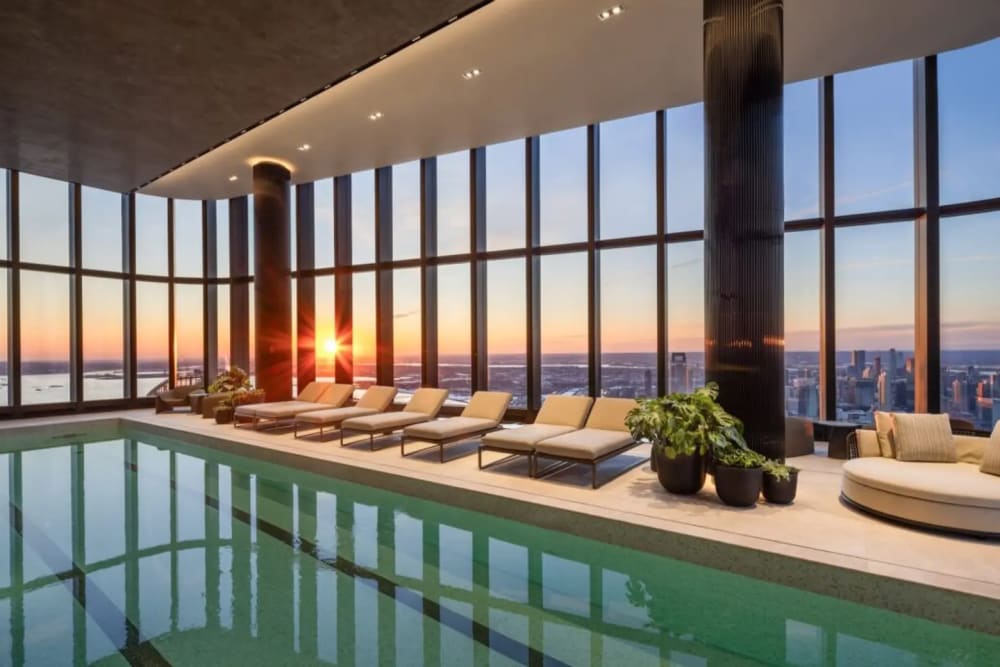
A decade ago, a building gym and a doorman constituted a strong amenity package for a luxury Manhattan building. Today, buyers expect significantly more — and the buildings that deliver it command pricing power that those with dated amenity packages simply cannot match.
The modern luxury amenity benchmark now includes:
- •Full-service fitness center with dedicated yoga and Pilates studios
- •Indoor swimming pool and spa with hydrotherapy offerings
- •Private dining room with catering kitchen for resident entertaining
- •Residents' lounge and co-working spaces with high-speed connectivity
- •Children's playroom and outdoor play areas
- •Golf simulator, squash court, or multi-sport court
- •Package and refrigerated delivery rooms
- •Electric vehicle charging stations in parking
- •Pet amenities including dog run and grooming station
- •24-hour concierge and doorman staffing
What separates truly elite buildings is the caliber of the staff operating these spaces — not just the physical infrastructure. A concierge who knows residents by name, coordinates reservations at impossible-to-book restaurants, and manages deliveries with precision creates an experience that drives exceptional retention and demand. For a comprehensive look at the building amenity landscape, read our post on private amenities in luxury NYC buildings.
5. Interior Specifications & Finish Quality
Once inside the unit, buyers evaluate finishes with a precision that often surprises sellers accustomed to their own space. In the luxury segment, every detail either adds to or subtracts from value. The most value-accretive interior features consistently observed in Manhattan luxury sales include:
- •Ceiling heights above 10 feet — ideally 11–12 feet or higher for ultra-luxury
- •Floor-to-ceiling windows with direct views (not light wells or neighboring facades)
- •Wide-plank hardwood or stone flooring throughout, no transitions between rooms
- •Chef's kitchen with professional-grade appliances: Sub-Zero, Wolf, Miele
- •Spa-caliber primary bathrooms with radiant heat floors, steam shower, and soaking tub
- •Solid-core doors, custom millwork, and designer hardware throughout
- •Sound attenuation between units — typically achieved only in concrete construction
- •Washer/dryer in unit, not in a shared laundry room
One interior feature that has dramatically shifted buyer expectations in recent years is the dedicated home office. Post-pandemic buyers place significant value on a true workspace with natural light, separate from the bedroom and living areas. Properties that deliver a genuine home office — not just a desk alcove — now command premiums over those that do not, particularly in the $2M–$5M price range where remote and hybrid work is most prevalent among buyers.
6. Smart Home Technology
Technology integration has shifted from a differentiator to a qualifier. Buyers who can afford $3 million or more for a Manhattan apartment expect climate, lighting, security, and entertainment systems to be integrated and controllable from their phone or through voice commands. Properties that lack this infrastructure face a choice: price it in or renovate it out.
The most valued smart home features in Manhattan luxury properties include integrated climate control, automated lighting with scene programming, motorized shades, video intercom tied to mobile devices, and whole-home audio. Buyers expect these systems to be pre-installed and operational — not rough-wired and requiring a separate contractor. Our in-depth look at smart home technology in luxury living covers the specific platforms and integrations that buyers are prioritizing today.
Beyond convenience, smart home infrastructure increasingly represents energy efficiency — an important consideration for buyers with ESG priorities. Buildings with LEED certification or superior energy performance ratings command premiums among international buyers who are accustomed to stricter environmental standards in their home markets. According to the U.S. Green Building Council, LEED-certified buildings consistently command rent and sale premiums over conventional counterparts — a gap that has widened as ESG-conscious capital has grown.
7. Private Outdoor Space
Perhaps no feature saw a more dramatic value acceleration in the post-2020 market than private outdoor space. Terraces, private roof decks, and garden-level outdoor areas became must-haves almost overnight — and while some of that urgency has normalized, the premium for meaningful private outdoor space has remained structurally elevated.
According to Miller Samuel's market analysis, Manhattan apartments with private terraces or balconies larger than 200 square feet trade at an average premium of 10–20% over comparable units without outdoor access. Full-floor penthouses with wraparound terraces in prime locations command premiums well above that range — sometimes exceeding 40% over non-penthouse comparables. Our analysis of rooftop terraces and outdoor spaces in NYC breaks down how buyers are specifically valuing outdoor square footage across different neighborhoods and building types.
The quality of the outdoor space matters as much as the quantity. A 500-square-foot terrace with southern exposure, open sky views, and proper drainage is worth substantially more than a 500-square-foot terrace that looks into a neighboring building's mechanical equipment. Buyers at the luxury level scrutinize outdoor orientation and condition with the same rigor they apply to interior finishes.
8. Storage, Parking & Practical Luxuries
In a city where storage is a perpetual challenge, dedicated storage units — particularly large, climate-controlled private rooms — add genuine value. Buyers with art collections, wine collections, or seasonal equipment actively seek buildings where substantial storage is available and ideally included with the purchase.
Parking is among the most valuable ancillary assets in Manhattan. Owned or deeded parking spots in the building — versus spaces rented month-to-month — command significant premiums at closing. In prime residential neighborhoods, a deeded parking spot can add $100,000–$200,000 to a property's value on its own. In some ultra-prime co-op buildings, parking availability is a decisive factor in purchase decisions for certain buyers.
Other practical features buyers consistently undervalue until they experience their absence: direct elevator access to the apartment (no shared hallway), utility rooms or mudrooms adjacent to service entrances, and high-quality closet infrastructure throughout. These elements reflect how well-considered the floor plan was at the design stage — and they are expensive to retrofit post-purchase.
9. Financial Structure: Co-op vs. Condo
The legal structure of a Manhattan property — whether it is a co-operative apartment or a condominium — has direct implications for value, liquidity, and buyer pool. Condominiums generally trade at a 10–20% premium over comparable co-ops because they offer greater flexibility: easier financing, no board approval process, the ability to rent the unit freely, and accessibility for foreign buyers.
Co-ops, by contrast, maintain value through selectivity. Buildings with highly restrictive admissions and low debt ratios attract well-capitalized, long-term residents — and the resulting building culture and financial stability are real differentiators. For the right buyer who plans to own long-term and values community over flexibility, a well-run co-op can be an outstanding investment. Understanding the full implications of each structure before you commit is critical — our guide to co-ops vs. condos for buyers covers the key distinctions in depth.
15–30%
Central Park View Premium
10–20%
Private Terrace Premium
10–20%
Condo Over Co-op Premium
15–25%
Starchitect Building Premium
10. Neighborhood Trajectory
Every neighborhood in Manhattan has a trajectory — not just a current status. Properties purchased in neighborhoods with strong forward momentum tend to outperform the broader market over five- and ten-year holding periods, while properties in plateaued or declining micro-markets can underperform even when individual unit quality is high.
The signals of positive neighborhood trajectory include: new cultural institutions or park improvements announced or under construction, transit infrastructure investments, the arrival of destination retail and restaurant operators, new luxury residential development (which signals developer confidence), and rising retail rents along neighborhood commercial corridors. According to research published in The Real Deal, neighborhoods that attract flagship luxury residential development typically see broad price appreciation across all residential product types within a 10-block radius within five years of those projects delivering.
This forward-looking analysis is one of the most valuable services a knowledgeable buyer's agent provides. Identifying neighborhoods that are three years from peak buyer demand — rather than already at peak — creates conditions for meaningful appreciation over a typical ownership period.
Putting It All Together
Manhattan real estate value is not a single variable — it is a weighted combination of structural location advantages, building-level differentiators, unit-specific features, and market-level timing. Properties that score well across most of these dimensions command premium pricing, attract multiple qualified buyers, and hold value more resiliently through market cycles.
Conversely, properties that score well on some features but poorly on others — a strong location with dated interiors, or exceptional finishes in a building with a weak amenity package — present a more complex value picture that requires careful analysis. These are precisely the situations where having a trusted advisor who understands how Manhattan buyers and appraisers weight each factor can make a material difference in your outcome.
If you're currently evaluating Manhattan properties — whether as a buyer assessing value or a seller preparing to list — I'd welcome the opportunity to walk through these variables in the context of your specific situation. Browse our current exclusive listings or reach out directly to schedule a consultation.
Back to BlogBuyer Guides
Related Articles

June 30, 2026 | Curtis Bain
NYC Rent Freeze 2026: What It Means for Buyers, Sellers & the Manhattan Market
VIEW ARTICLE
March 20, 2026 | Curtis Bain
NYC Closing Costs Explained: What Every Buyer Should Know
VIEW ARTICLE
February 18, 2026 | Curtis Bain