Buyer Guides
February 18, 2026
Understanding Luxury Home Valuations in Today's Market
Manhattan's luxury real estate market is experiencing a remarkable surge in 2026, with trophy properties valued at $10 million and above commanding unprecedented attention from domestic and international buyers. Understanding how these properties are valued requires examining the unique factors that differentiate luxury real estate from the broader market.
The Anatomy of Luxury Valuations
Unlike conventional real estate where comparable sales drive pricing, luxury home valuations in New York City operate within a more nuanced framework. According to Miller Samuel's market data, the median Manhattan sale price has climbed 14.8% year-over-year to $1.4 million, but this figure masks the dramatic divergence occurring at the upper end of the market.
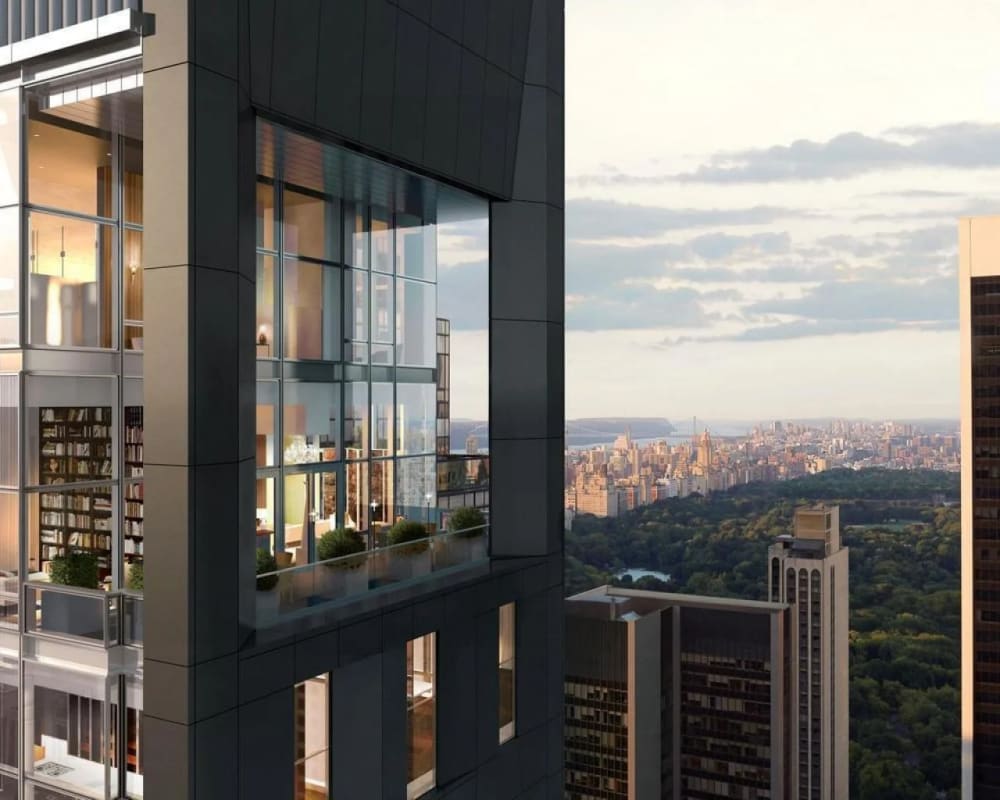
Properties above $4 million face intense competition, with luxury contracts posting their strongest performance since late 2024. What drives these valuations? The answer lies in understanding the confluence of scarcity, amenities, location premium, and buyer psychology.
The Geography of Value
In Manhattan's luxury segment, location is determinative. Central Park adjacency carries a measurable premium, with properties offering direct park views or park frontage trading significantly above comparables just one block removed. This proximity premium can range from 15-30% depending on the specific address and view corridors.
The Billionaires' Row corridor along 57th Street continues to set global benchmarks, with per-square-foot pricing reaching $5,000-$8,000 at top developments. Tribeca maintains its position as one of the city's most stable luxury enclaves, with median condo prices hovering around $3.6 million, supported by limited inventory and the neighborhood's historic industrial character.
The Financial District has emerged as a neighborhood to watch, with searches climbing nearly 47% year-over-year as new conversions transform the area's residential appeal. This demonstrates how market perception can rapidly influence valuations in transitioning neighborhoods.
Amenity Infrastructure and Building Pedigree
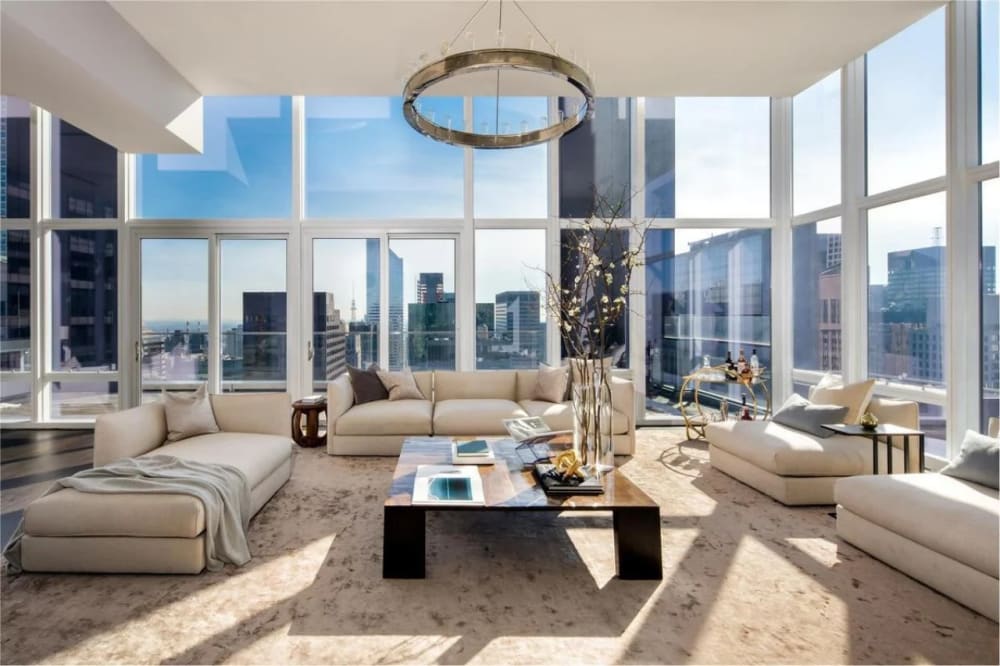
Today's luxury buyers evaluate buildings as comprehensive lifestyle platforms. The presence of advanced amenity packages, including air filtration systems, whole-house water purification, dedicated wellness centers, and private dining facilities, has become table stakes rather than differentiators.
Buildings designed by starchitects or featuring distinctive architectural provenance command premiums that compound over time. The reputation of the development team, the track record of building management, and the composition of the resident base all factor into sophisticated valuation models.
New development currently commands significant premiums over resale properties lacking modern systems. This gap has widened as buyers prioritize turnkey luxury, properties requiring zero immediate investment or renovation.
How Payment Method Affects Value
Manhattan's luxury market operates as what industry insiders call a "cash-first" environment. Over 72% of transactions above $5 million in comparable markets involve all-cash purchases, insulating these buyers from mortgage rate fluctuations that constrain the broader market.
This cash dominance creates a valuation dynamic where properties attractive to all-cash buyers, typically those above $3 million, can sustain premium pricing regardless of prevailing interest rates. The current 6.2% mortgage environment, while elevated historically, barely registers in luxury pricing discussions.
Tax Considerations in Valuation
Understanding NYC's mansion tax structure is critical for accurate valuation analysis. The graduated tax ranges from 1% at $1 million to 3.9% on purchases above $25 million. On a $5 million purchase, the mansion tax totals $175,000, a non-trivial closing cost that sophisticated buyers factor into their maximum price calculations.
For international buyers and those structuring purchases through LLCs, additional complexity arises around beneficial ownership disclosure requirements and potential future pied-a-terre taxes, though the latter remains in proposal stages as of early 2026.
Market Timing and Seasonal Patterns
Luxury valuations in New York City exhibit seasonal patterns that differ from the broader market. While spring traditionally drives peak activity across all segments, the luxury market shows stronger resilience during traditionally slower periods, with trophy properties frequently transacting during summer months and year-end when high-net-worth individuals finalize tax and estate planning strategies.
The current environment entering spring 2026 presents particularly favorable conditions for sellers. Mortgage rates are projected to decline toward the high 5% range by year-end, which will expand the buyer pool for properties in the $3-10 million range where financing still plays a role.
The International Dimension
Foreign capital continues flowing into Manhattan luxury real estate despite currency fluctuations and geopolitical uncertainty. Buyers from the Middle East, Asia, and Europe view Manhattan real estate as a stable store of value, akin to gold or blue-chip art, offering portfolio diversification and relative anonymity through LLC ownership structures.
This international demand creates a valuation floor for true trophy properties. When a penthouse at 432 Park Avenue or a townhouse in the West Village comes to market, it competes in a global auction among qualified buyers from multiple continents.
Comparative Market Analysis in the Luxury Segment
Traditional comparative market analysis, the backbone of residential real estate valuation, requires significant adaptation for luxury properties. No two penthouses are identical. Variables including ceiling heights, private outdoor space, view corridors, floor position, exposure, and proprietary amenities create differentiation that numerical adjustments struggle to capture.
The most sophisticated luxury valuations rely on a combination of quantitative metrics (price per square foot, sales velocity, absorption rates) and qualitative assessments (architectural significance, cultural cachet, celebrity provenance). A property's narrative, its story, can materially impact valuation in ways that spreadsheets cannot fully model.
Days on Market as a Valuation Signal
In the luxury segment, time on market serves as a critical valuation diagnostic. Properties exceeding 180 days of market exposure historically sell for just 81% of original asking price, while those moving within six months realize 94% of list. This 13-percentage-point differential underscores the importance of accurate initial pricing.
The luxury market punishes overpricing more severely than the broader market. Buyers at this level conduct extensive due diligence, engage sophisticated advisors, and possess the patience to wait for appropriately priced inventory. A property that languishes signals either pricing misalignment or fundamental deficiencies.
The Role of Stock Market Performance
Wall Street bonuses and equity market performance directly correlate with luxury real estate activity in Manhattan. Record equity markets through late 2025 and early 2026 boosted wealth among Manhattan's core buyer demographic, enabling the current surge in trophy property transactions.
This relationship creates a valuation linkage between financial markets and real estate that doesn't exist in most other cities. When the S&P 500 posts gains, Manhattan luxury inventory absorbs faster and at higher price points.
Valuation Trends Through 2026
Multiple factors converge to support continued strength in luxury valuations through 2026. Market data from StreetEasy and analyst consensus points toward 3-5% annual appreciation citywide, with luxury outpacing mid-market performance. Supply constraints persist, island geography and restrictive zoning limit new luxury inventory, while global demand shows no signs of abating.
The combination of recovering mortgage affordability (as rates moderate), stable employment in finance and technology sectors, and Manhattan's enduring appeal as a global city supports optimistic near-term projections. Properties that are well-priced, properly marketed, and positioned within their competitive set should experience continued appreciation through the current cycle.
The Art and Science of Luxury Valuation
Understanding luxury home valuations in today's market requires balancing quantitative analysis with qualitative judgment. While data on comparable sales, price per square foot, and absorption rates provides essential foundation, the true art lies in recognizing how scarcity, narrative, timing, and buyer psychology intersect to determine value.
For sellers, this means engaging advisors who understand these nuances and can position properties to capture maximum value. For buyers, it demands patience, thorough due diligence, and recognition that in Manhattan's luxury market, paying full price for the right property often proves wiser than negotiating discounts on the wrong one.
The luxury real estate market heading into spring 2026 offers compelling opportunities for both buyers and sellers who understand how valuations are truly determined in New York City's most exclusive properties.
Back to BlogBuyer Guides