Neighborhood Guides
August 25, 2026
Living in Flatiron: What Buyers Need to Know
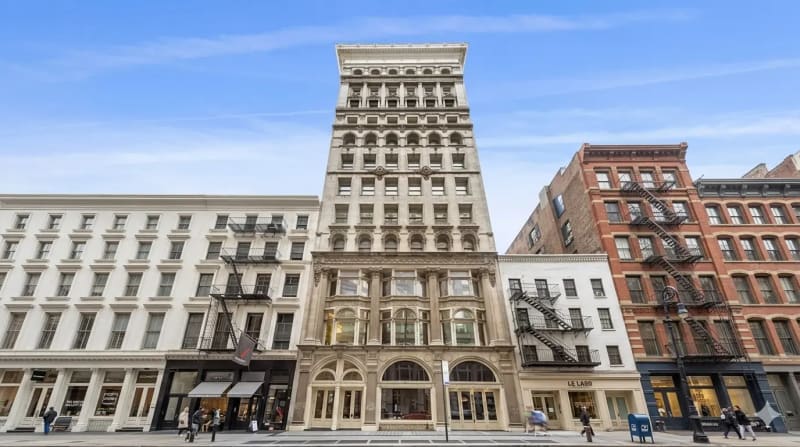
Flatiron takes its name from the triangular Flatiron Building at Fifth Avenue and Broadway, and that building's blend of historic grandeur and structural ambition still defines how the neighborhood reads today. Flatiron is one of the few pockets of Manhattan where a genuine concentration of cast-iron and Beaux-Arts commercial architecture converted almost wholesale into residential lofts, giving the neighborhood a housing stock that looks and lives differently from most of the city.
For buyers who are further along than admiring the skyline, the questions that matter are more specific: what does inventory cost per square foot right now, is this a condo market or a co-op market, what does day-to-day life look like once the lease or mortgage is signed, and how does it compare to the neighborhood everyone mentions in the same breath, NoMad.
This guide answers each of those in order.
Flatiron's Real Estate Market Today: Prices & Inventory
Flatiron's current housing stock spans a wide range, and the numbers reflect that breadth. Within my own neighborhood data, list prices in Flatiron run from roughly $440,000 at the low end up to $30 million for the neighborhood's most significant lofts and penthouses, with an average list price near $3.65 million and an average sold price closer to $2.47 million. The average price per square foot sits around $2,173, which is a meaningful discount to NoMad's roughly $2,427 per square foot just a few blocks north, even though the two neighborhoods share a border at Madison Square Park. At any given time there are typically around 230 homes for sale in the neighborhood, a considerably deeper pool than NoMad's under-100-listing market, which gives Flatiron buyers more room to compare units before committing. For a full breakdown of what those prices mean once taxes, financing, and monthly carrying costs are factored in, see my guide to what it costs to buy an apartment in Flatiron.
That gap between list and sold pricing is worth sitting with.
A wide spread between average list and average sold price usually signals a market where a meaningful share of inventory is aspirationally priced, and where well-prepared buyers who negotiate seriously, rather than simply meeting the ask, have real room to work with. According to StreetEasy's market data dashboard, Manhattan's broader luxury segment has remained resilient through recent financing shifts, and Flatiron's deeper inventory relative to its northern neighbor means the neighborhood tends to hold that leverage a bit longer into a selling season before the best units get bid up.
Cast-Iron Lofts vs. New Development: What You'll Find
The signature Flatiron product is the cast-iron loft conversion: buildings originally constructed for commercial or light-manufacturing use in the late 19th and early 20th centuries, later reimagined with exposed brick and cast-iron columns, oversized windows, and ceiling heights that new construction rarely matches at a comparable price point. These buildings cluster along Fifth Avenue, Broadway, and the side streets radiating out from Madison Square Park, and they remain the reason most buyers start looking in Flatiron in the first place.
Because so many of these buildings converted directly from commercial to condo ownership rather than passing through a co-op corporation, Flatiron's inventory skews condo-heavy in the same way NoMad's does, which matters enormously for how a purchase actually moves. My complete condo versus co-op guide covers the tradeoffs in depth, but the short version is that a Flatiron condo purchase generally avoids the multi-week board package and interview process that shapes co-op transactions further uptown, though buyers should still budget time for a careful building financial review. A smaller but growing share of Flatiron's inventory is full-service new development, offering the doorman staffing, fitness centers, and package rooms that many prewar loft conversions were never built to accommodate. Whichever category a buyer lands in, an engineer's inspection is worth commissioning on any prewar conversion, since retrofitted mechanical systems and facade maintenance history can carry real long-term cost even when the per-square-foot price looks comparable to newer stock.

Everyday Life: Walkability, Dining & Green Space
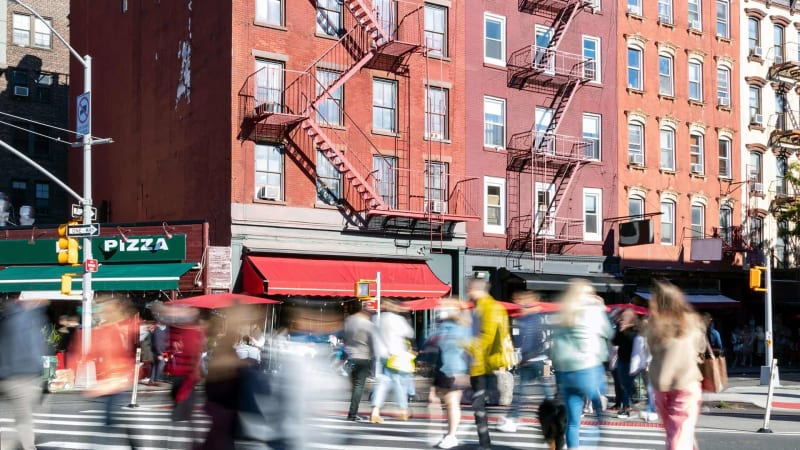
Real estate value in Flatiron cannot be separated from how the neighborhood actually functions day to day, and it scores a perfect 10 out of 10 for walkability in my own neighborhood data, putting it firmly among the most walkable neighborhoods in Manhattan. Madison Square Park anchors the neighborhood as its green centerpiece, ringed by an unusually dense restaurant corridor that includes Eleven Madison Park along with the broader dining scene along Park Avenue South and Broadway. Eataly and the Museum of Mathematics add to a stretch of blocks that functions almost as a self-contained downtown within Midtown South.
Transit access is equally strong, with multiple subway lines converging near Union Square and 23rd Street, putting Midtown, the Village, and downtown all within a short ride. Families weighing the neighborhood should note that school zone scores in Flatiron land around the middle of the Manhattan range compared with uptown enclaves like the Upper West Side, so it is worth reviewing specific zoned schools alongside any private school commute before finalizing a search. The neighborhood's own history, from its 19th-century run as the retail corridor known as Ladies' Mile through its more recent tech-industry nickname of Silicon Alley, is documented in more detail on Wikipedia's overview of the Flatiron District.

Flatiron vs. NoMad: Which Side of the Park?
Flatiron and NoMad sit back-to-back around Madison Square Park and share nearly identical walkability and transit access, so the decision between them tends to come down to housing stock and price rather than lifestyle. I cover NoMad's side of this comparison in detail in my Ultimate Guide to NoMad Real Estate, but the short version from the Flatiron side is this: Flatiron carries the deeper concentration of authentic cast-iron loft conversions, a larger active listing pool, and a modest discount on price per square foot. NoMad's inventory trends newer and more amenity-dense, with a marginally higher average price per square foot reflecting a greater share of full-service condo product.
Neither neighborhood is meaningfully more convenient than the other for daily life, which is why many of my clients end up touring both in the same search rather than committing to one before viewing anything. The physical distance between them is a matter of a few blocks, not a different commute or a different lifestyle, so I generally recommend buyers targeting either neighborhood also walk through the other one before narrowing their search, since the right building and the right price often matter more than which side of the park it happens to sit on. I break the full head-to-head down, including current pricing and negotiating room on each side, in Flatiron vs. NoMad: Which Neighborhood Is Right for You?
Who Should Buy in Flatiron
Flatiron tends to suit buyers who want the character of a genuine prewar loft, exposed brick, cast-iron columns, ceiling heights well above the Manhattan standard, without giving up walkability or a deep restaurant scene at their doorstep. It is a strong fit for design-minded professionals and creative buyers drawn to the neighborhood's loft product, for buyers who want a faster condo closing process without an extended co-op board timeline, and for anyone who wants meaningfully more inventory to choose from than the tighter markets immediately to the north. Buyers with young families should weigh the neighborhood's moderate school zone scores against uptown alternatives, and anyone set on new-construction amenities over loft character may find NoMad or Hudson Yards a closer match. Given Flatiron's deeper listing pool, buyers here generally have more room to negotiate than in NoMad, but the best-renovated lofts on high floors with private outdoor space still move quickly, so it pays to be pre-approved and ready to act before touring.
Frequently Asked Questions About Living in Flatiron
Is Flatiron a good neighborhood to buy real estate in NYC?
Yes. Flatiron combines a perfect 10 out of 10 walkability score with a deep concentration of cast-iron loft conversions, strong transit access, and one of Manhattan's densest dining corridors around Madison Square Park. Its larger active listing pool compared to neighboring NoMad also gives buyers more room to compare and negotiate.
What is the average price per square foot in Flatiron?
Flatiron currently averages around $2,173 per square foot, with an average list price near $3.65 million and an average sold price closer to $2.47 million. That is a modest discount to neighboring NoMad, which averages closer to $2,427 per square foot.
Are Flatiron apartments mostly condos or co-ops?
Flatiron's housing stock skews condo-heavy, since many of its cast-iron buildings converted directly from commercial to condo ownership rather than through a long-established co-op corporation. That generally means a faster purchase process with lighter board scrutiny than a comparable co-op elsewhere in Manhattan.
How does Flatiron compare to NoMad for buyers?
The two neighborhoods share nearly identical walkability and transit access. Flatiron has the deeper stock of authentic cast-iron loft conversions and a larger, more negotiable listing pool, while NoMad trends slightly newer and more condo-amenity-heavy with a modestly higher price per square foot.
If you are weighing Flatiron against NoMad, or want to understand what today's inventory and pricing actually mean for a specific building or budget, I would welcome the chance to walk you through current listings in person. You can reach me directly at cbain@bhsusa.com or 212.814.9404, or read more about my approach on my about page.
Sources & References
Neighborhood Guides