Market Reports
March 31, 2026
Manhattan Luxury Market Report: Q1 2026
January 1 - March 31, 2026
The first quarter of 2026 has solidified Manhattan's position as one of the world's most resilient luxury real estate markets. After a banner 2025 that saw nearly $12 billion in luxury sales - the second-highest total since 2006 - Q1 2026 has maintained this extraordinary momentum with constrained inventory, disciplined pricing, and sustained buyer demand creating a uniquely competitive market environment.
As we transition into the spring selling season, the data paints a clear picture: this is not a market waiting for correction. It is a market operating with confidence, intention, and remarkable staying power.
Key Q1 2026 Highlights
- •Luxury contracts ($5M+) up 3% year-over-year in January, marking the second-strongest January in a decade
- •Luxury inventory at historic lows: only 732 active listings in January - the lowest since 2013
- •Average price per square foot rose substantially, driven by ultra-luxury sales over $4,000/sqft
- •February posted the third-strongest month for $5M+ contracts in 10 years
- •Average days on market tightened - luxury properties moving faster than in 2025
- •Only 65% of contracts closed below asking price in Q1 2026, down from 75-80% a year earlier
+3%
Luxury Contracts YoY
732
Active Listings (Jan)
65%
Closed Below Ask
151
Avg Days on Market
$5,000
Median Rent
90%+
Cash Deals ($3M+)
The 2025 Foundation: Record-Breaking Momentum
To understand Q1 2026, we must first acknowledge the remarkable foundation laid in 2025. According to Olshan Realty's year-end luxury market report, Manhattan logged 1,436 luxury contracts at $4 million and above - an 11% increase over 2024 - with total asking-price volume of approximately $11.5 billion. This represented the second-best year for luxury sales since 2006, trailing only the extraordinary post-pandemic rebound of 2021.
What made 2025 remarkable was not speculative euphoria but price discipline. Average luxury asking prices actually declined roughly 4% from 2024, and that modest recalibration unlocked unprecedented deal volume. Sellers who met buyers where they were - rather than clinging to aspirational pricing - captured one of the best luxury years on record.
The Trophy Segment
The ultra-luxury tier ($10M+) posted 284 contracts in 2025, the second-strongest annual tally on record. Properties at this level - prewar penthouses, full-floor residences, townhouses - represent a tiny fraction of total inventory. When one lists, multiple qualified buyers compete. This scarcity dynamic has only intensified in early 2026.
Q1 2026 By the Numbers
Luxury Contracts ($5M+)
Monthly contract volume comparison
January 2026: Strong Start
January set the tone for the quarter. According to Corcoran's Manhattan $5M+ Luxury Sales report, Manhattan's luxury market saw a solid start to the year with the second-strongest January for $5M+ contracts in a decade. Active listings fell to just 732 - the lowest January total since 2013.
Resale co-ops and new developments led the overall inventory drop, each posting double-digit annual declines. New development contracts asking over $4,000 per square foot, particularly on the Upper East Side, drove the year-over-year increase in contract activity. Average days on market fell to 151 days, down slightly from the prior year, while average price per square foot surged due to the concentration of ultra-luxury sales.
Active Luxury Listings (January)
Manhattan $5M+ inventory trending at historic lows
February 2026: Accelerating Demand
February maintained January's strength. Corcoran's February luxury report noted that luxury inventory continued to decline, average marketing times rose modestly, and average price per square foot increased versus 2025. This was the third-strongest February in 10 years for contracts above $5 million.
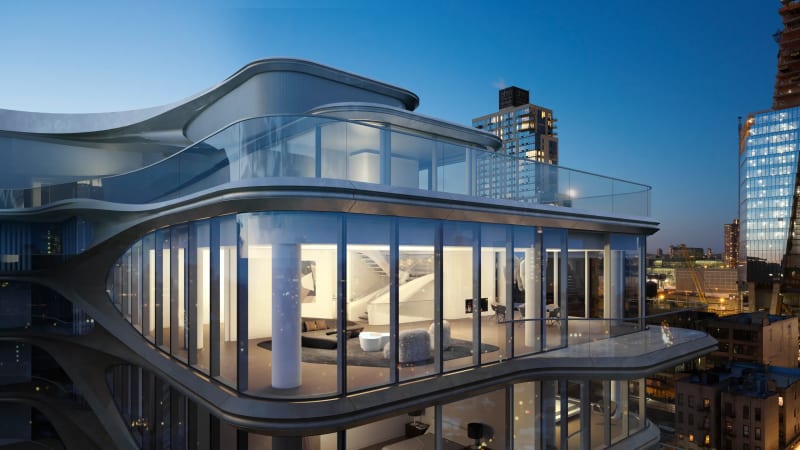
The market is clearly tightening. In a single week in early February, 41 luxury contracts were signed - a significant spike that underscored the pent-up demand meeting limited supply. The most notable transaction during Q1 was at 53W53, where a penthouse commanded premium pricing in the resurgent luxury market.
Broader Market Context: All Price Tiers
Overall Sales Activity
According to Corcoran's Manhattan Condo & Co-Op Sales reports, contract activity in Q1 2026 varied by price and location. Contracts under $1 million fell 16-20% year-over-year due to slower resale co-op market activity. In contrast, the $2M-$3M price range posted a 18-20% year-over-year gain amid strong resale condo and new development sales.
Average days on market declined slightly to 134 days in February, down 1% from February 2025 and 6% below the February historical average. This acceleration signals that well-priced properties are moving faster than in previous years. The Upper East Side posted a 3% annual increase in signed contracts, while other submarkets posted declines, with Midtown and Upper Manhattan each falling 15%.
Contract Activity by Price Tier
Year-over-year change in signed contracts, Q1 2026
The Great Divide: Condos vs. Co-ops
One of Q1 2026's most striking trends is the sharp divergence between condos and co-ops. According to multiple market analyses, co-op contracts dropped 15% year-over-year in January, hitting a four-year monthly low. February saw co-op activity decline 9% annually to an eight-year February low.
This slowdown reflects buyer selectivity in a segment where board approval processes, financing restrictions, and maintenance structures present additional hurdles. However, for sophisticated buyers who can navigate these complexities, co-ops offer strong value: prices are down 9% year-over-year, competition has decreased, and the price-per-square-foot discount versus condos typically runs 20-30%.
What's Driving the Luxury Surge?
1. Stock Market Gains and Wall Street Bonuses
Record equity markets through late 2025 and early 2026 boosted wealth among Manhattan's core buyer demographic. The S&P 500 hit new highs, with some equities up 30% compared to pre-pandemic levels. Wall Street's bonus season in February-March 2026 traditionally triggers luxury home purchases, and this year was no exception. Bonuses were projected to be 35% higher in 2025, injecting billions into the housing ecosystem.
2. International Capital Flows
Foreign buyers from the Middle East, Asia, and Europe continue to view Manhattan real estate as a stable store of value. Despite a strong dollar, international demand has not dampened. These buyers typically concentrate in the $2M+ price points and often structure purchases through LLCs and trusts to navigate tax strategies, particularly the NYC mansion tax, which reaches 3.9% on purchases above $25 million.
3. Extreme Supply Constraints
True trophy properties - prewar penthouses, full-floor residences, townhouses - represent a tiny fraction of total inventory. When one lists, multiple qualified buyers compete. With luxury listings at historic lows (732 in January 2026 versus over 1,000+ in typical years), scarcity is the dominant force driving pricing power to sellers.
4. Cash Buyer Dominance
Manhattan's luxury market is largely insulated from interest rate volatility. Cash transactions dominated the $3M+ segment, with 90%+ of deals over $3 million closed in cash during Q1. This high cash concentration means that even with mortgage rates hovering around 6.2%, the luxury tier continues to transact at pace.
Rental Market: The Pressure Cooker
According to Corcoran's NYC Residential Rental Market reports, Manhattan's median rent hit $5,000 per month in February 2026 - a new all-time high. Luxury doorman buildings reached a record median of $5,295 per month.
Inventory has fallen to the tightest level in nearly four years, with only 5,290 active listings in February, down 26% year-over-year. Vacancy remained anchored below 2%, sitting at 1.73% in February. Despite rising rents, demand picked up across every product type, with available units being leased at the fastest pace in eight months.
This rental pressure is nudging some renters toward ownership. At current rent levels ($5,000+/month median), buying becomes competitive for properties in the $800K-$1.5M range, where monthly ownership costs (mortgage, maintenance, taxes) can match or undercut rental payments.
Manhattan Median Rent
Monthly median rent comparison
Where the Action Is
Upper East Side: The Luxury Powerhouse
The Upper East Side posted steady year-over-year sales growth, with particular strength in new development. Developments like 1122 Madison Avenue, with pricing above $3,000 per square foot, drove significant contract activity. The neighborhood's new development market is reportedly "on fire," with many buildings selling out before reaching the public market.
Midtown: Mixed Performance
Midtown saw a 15-21% drop in signed contracts during Q1, representing the most notable decline among submarkets. This reflects ongoing challenges in attracting residential buyers to a neighborhood historically dominated by commercial activity, despite trophy properties like Aman New York continuing to command premium pricing.
Downtown: Premium for Lifestyle
Downtown Manhattan - Tribeca, West Village, Financial District - leaned into lifestyle appeal. Buyers demonstrated willingness to pay premiums for character, location, and design rather than just square footage. Trophy developments in these neighborhoods maintained strong pricing power throughout Q1.
What Comes Next
Mortgage Rate Trajectory
Rates are currently around 6.2%, with projections suggesting a gradual decline toward 5.9% by year-end. Each quarter-point drop expands buyer purchasing power by approximately 3%. This modest easing should encourage more financed buyers back into the market, particularly in the $1M-$3M mid-market segment that has struggled with affordability.
Inventory Dynamics
Inventory is beginning to tick upward across many parts of the city, giving buyers more options than they've had in recent seasons. However, more inventory doesn't automatically equal less competition. In fact, experts predict a busier-than-normal spring market, fueled by rising inventory, returning buyer demand, and renewed confidence.
According to Brown Harris Stevens' 2026 outlook: "Well-priced listings should benefit from tighter supply and renewed demand, particularly in Manhattan and Brooklyn resale markets. Buyers hoping to wait for significantly lower rates may face a more crowded landscape later in the year."
The Competition Story
This is critical for both buyers and sellers to understand: 2026 is unlikely to be a "price correction" story. It is a competition story. For sellers preparing for spring, the earlier they enter this window of rising confidence, the better positioned they'll be. For buyers, preparation matters more than timing - informed, decisive buyers will have an advantage.
Where I See the Market Moving
1. Luxury Will Continue to Outperform
The fundamentals driving luxury demand remain intact: stock market strength, Wall Street compensation, international capital, and extreme scarcity of trophy properties. I expect the luxury segment to see 2-4% appreciation through the remainder of 2026, with ultra-luxury ($10M+) potentially outpacing that.
2. Mid-Market Will Benefit from Rate Relief
The $1M-$3M segment, which struggled in Q1 with contracts down 10-16%, should see renewed activity as rates decline. By late spring/early summer, we could see this tier rebound as financed buyers re-enter the market with improved purchasing power.
3. Co-ops Present Value Opportunities
For buyers who can navigate board approval processes, co-ops offer compelling value. With prices down 9% year-over-year and competition decreased, this segment rewards patience and local expertise. I'm advising clients to look closely at well-maintained co-op buildings in prime locations - particularly on the Upper East Side and Upper West Side.
4. New Development Momentum Continues
New development continues to command premiums over resale properties lacking modern systems and amenities. Projects like 1122 Madison Avenue, Eighty Clarkson, and developments in Hudson Yards and the Financial District are attracting significant buyer interest. Expect this to continue through spring, particularly for properties offering air filtration systems, whole-house water purification, and high-end amenity packages.
5. Spring Timing Is Critical
April through June historically generate the highest buyer traffic and strongest offers. This spring looks particularly active given pent-up demand, improving sentiment, and modest rate relief. Sellers who list early in this window will capture maximum attention. Buyers who wait for "better deals" later in the year may face a more crowded, competitive landscape.
Why NYC Remains Resilient
It's worth stepping back from quarterly data to remember why Manhattan's luxury market remains one of the most resilient in the world:
- •Global Economic Influence: New York remains the financial capital of the world, home to Wall Street, the largest banks, hedge funds, and private equity firms.
- •Cultural Capital: Museums, restaurants, theater, fashion - no other American city offers Manhattan's cultural depth.
- •Geographic Constraints: An island with finite developable land creates inherent scarcity, particularly for trophy properties.
- •International Safe Haven: For global wealth seeking stability, Manhattan real estate remains a preferred asset class.
- •Return to Office: Major corporations' back-to-office mandates are bringing affluent buyers back to the city on a more permanent basis.
These structural advantages mean that even during periods of economic uncertainty, political volatility, or rate fluctuations, Manhattan absorbs the noise and keeps transacting.
What This Means for You
For Buyers
Act with urgency on well-priced opportunities. This is not a market that rewards hesitation. Well-priced properties in good condition are moving quickly - often within weeks rather than months.
Get pre-approved before you shop. In competitive situations, sellers favor buyers with financing already secured. Even if you're paying cash, having documentation ready demonstrates seriousness.
Don't wait for rates to hit 5%. By the time rates drop to 5-5.5%, you'll be competing with many more buyers. The current 6.2% environment offers a window before the spring rush intensifies.
Consider co-ops for value. If you can navigate board approval, co-ops offer 20-30% price-per-square-foot discounts versus condos, with less competition and stronger negotiating leverage.
For Sellers
Price at market, not aspiration. The strongest results in Q1 went to sellers who priced into the lane where contracts are actually happening. Overpriced listings sit, while market-priced properties receive multiple offers.
List early in the spring window. April-June generates maximum traffic. Listing in March positions you to capture the surge of buyers entering the market as weather improves and tax season concludes.
Invest in presentation. Professional staging, photography, and move-in condition differentiate your listing in a market where buyers have choices. First impressions matter enormously.
Expect 40-60 days on market. The instant-sale market of 2021-2022 is over. Build realistic timelines. Properties are moving, but they're moving at a measured pace that rewards patience and strategic pricing.
A Market Operating with Confidence
Q1 2026 demonstrated that Manhattan's luxury market is neither accelerating recklessly nor pulling back defensively - it is operating with intention. Inventory remains constrained, pricing is holding, and buyers are engaging with clarity rather than urgency.
This is a market that rewards realism, patience, and conviction. For those aligned with its rhythm, Manhattan remains one of the most reliable luxury real estate environments in the world.
As we transition into spring, the fundamentals remain solid: strong employment in finance and professional services, limited new construction supply, steady international capital flows, and a buyer pool with significant purchasing power. These forces position Manhattan for continued strength through 2026 and beyond.
Whether you're considering a purchase in Tribeca, selling a co-op on the Upper East Side, or exploring new development opportunities in Hudson Yards, the message is clear: this is a market in motion. The question is not whether to engage - it's how to position yourself for success.
Key Data Sources & References
This report synthesizes data from Olshan Realty, The Corcoran Group, Douglas Elliman, Miller Samuel, and independent market analysts. All statistics represent the best available data as of March 31, 2026. Market conditions are subject to change.
For personalized market guidance or to discuss your specific real estate goals, please contact me directly.
Back to Blog